"At Risk"
"At Risk"
Transforming Deficit Myths About Learning, Language and Culture
September 29th, 2019
By Emily Williams
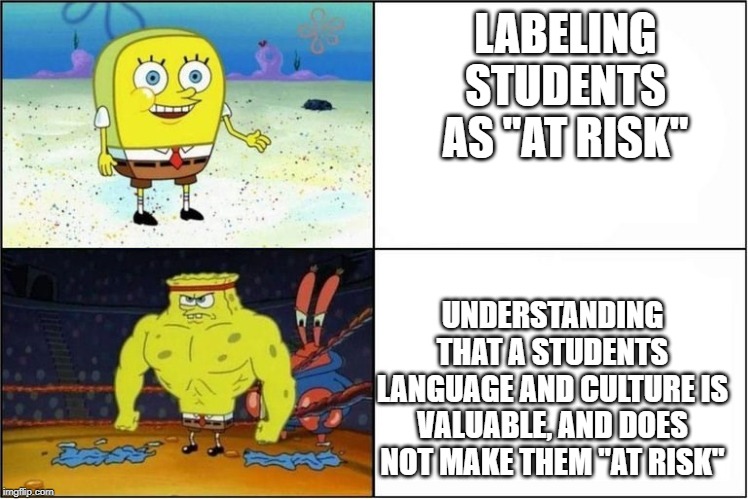
Right when children walk through the schools doors, they're labeled as "at risk." This socially constructed label is used to separate and isolate students, and to explain failure without considering important factors, such as class, race, and gender inequities.

There are many assumptions and beliefs used to label children as "at risk." The first is that it is automatically assumed that and "at risk" students is going to have a language problem, that their language and culture are deficient. The second assumption is that children need be separated from the classroom to work on their language development somewhere else, normally without groups of students, which hinders their learning even farther. The 3rd assumption is that standardized testing accurately measures and identifies students who have learning/language problems. The 4th being that their parents don't care.
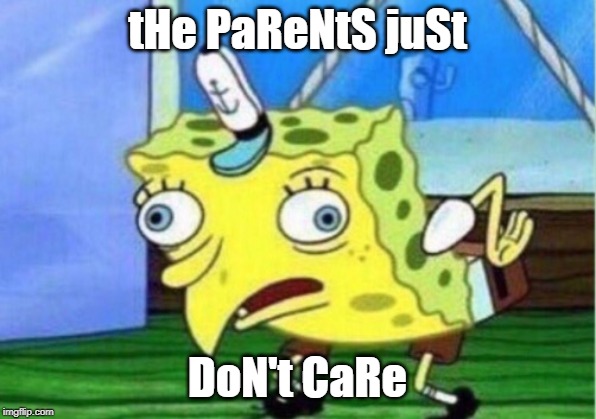
Here are assumptions and ways that we can change the way we think:
- Assume that children are proficient in their native language, and bring this into the classroom. Value who they are and their diversity
- Present students with opportunities to learn and explore language. Understand that it is okay to keep students in the classroom to do this, and that by having this environment with different languages and ways of speaking, all students will have the opportunity to learn from each other.
- Observe the progress made by students by having conversations with them, and by using their authentic work to track growth. See how they use language knowledge they had previous to the classroom, as well as the new knowledge that they're building on top of that.
- Assume that parents care about their children and their education!

"When we accept our children's knowledge about language, learning and culture, we not only validate their being, but acknowledge their self worth." (Flores, Cousin, Diaz, 373)
Things to think about:
- What can we do instead of standardized tests to keep track of student knowledge and growth?
- How will you increase parent-teacher partnerships in your classroom?
- What will you do if you're in a school that make the assumptions that lead to students as being labeled as "at risk"
- What can you do to allow students to bring their culture and experiences into the classroom?



Emily,
ReplyDeleteI enjoyed reading your post! As future teachers it is really important to reflect on these questions and consider how we are going to continue to dodge the label "at risk". I believe to avoid standardized testing but still monitor our students progress, we can do monthly check-ins with students and keep track of how they are improving each month as well as consider where they may need help. Standardized tests are very intimidating to students and a lot of students do have testing anxiety especially with these big test. Working with students one-on-one for a monthly check-in makes it more personable for the students.
I would increase parent involvement and parent-teacher relationships through keeping in contact with parents weekly through a weekly newsletter. Students would take the newsletter home and included would be opportunities for parents to come into the classroom and interact with the students. I would also contact parents every other week through email or phone call, updating them on their students progress and where they need to improve as well as any important information. parents need to know!
Maddy,
DeleteI love that you brought up students who have testing anxiety! So many students have this, and are passing classes with flying colors, but do not do so hot on standardized testing because of how stressful they can be. I love that you came up with solutions to take out standardized testing such as getting parents involved! Contacting parents on their students progress and letting them know where there student needs to improve is so important because it let's them know what they can be doing at home. I also like your idea to bring parents into the classroom, and to allow them to interact with the students.
Emily,
ReplyDeleteThank you for a great post! When you said, "Assume that children are proficient in their native language, and bring this into the classroom. Value who they are and their diversity", I thought about our Spec. Ed. class. One of the Evidence Based Approaches showed us exactly how to do that. The basic premise of the Language First Approach method is to help students learn to read through their own words. Students relate an experience and a scribe (teacher, tutor, parent or more knowledgeable student) writes down what the students says or draws. The transcription is then used as a literacy source. This process is repeated over again to build vocabulary and literacy. I like this program because it can also involve the parents. Students can go home and read their stories to the parents as an assignment. I think balancing the amount of parental involvement can be difficult. You don't want to put pressure on parents who don't have the time but you also want them to feel comfortable enough to be in the classroom. I like the idea of using parents as resources to teach culturally relevant and specific lessons. For example, having the mother come in and show the students how to make her recipe turned into learning how to write procedures, work collaboratively during the lesson and then as a group to write a thank you. Parents are an incredible resource, I just think figuring out what works for your classroom and planning.
Dee,
DeleteI love that you connected out special ed class to this! It's so important to implement the Language First Approach because, as you said, it builds vocabulary and literacy. This can give every student in our classes a chance to succeed. I also agree that balancing parent involvement is going to be tricky, and it's something that I actually worry about when I start thinking of my own classroom. It's important to let them know that they're always welcome in the classroom without putting pressure on them to do so, as this can make parents who have multiple children or no time to do so feel bad. It will definitely take a lot of planning and communication.
Emily,
ReplyDeleteI love the points you made and the spongebob memes of course! It is always important not to assume the worst of our students I.e. that their parents don't care or because English isn't their first language that they have poor literacy skills. If students live up to the expectations teachers set for them, then some students are set up to fail if teachers look at them with the deficit perspective. I agree that as teachers we need to scaffold what the kids already know and bring in their culture into the classroom. I think bringing in students culture and experiences into the classroom should be easy and fun as well as can be serious when needed. Community circles are a great conversation starter for students to give input and have a facilitated discussion. Also there are various activities that bring culture into the classroom by having the kids bring in personal experiences. Parent involvement as well as bringing people from the community into the classroom are also a great way to build community!
Alaina,
Delete"I agree that as teachers we need to scaffold what the kids already know and bring in their culture into the classroom." This is so true and definitely needs to be said! Allowing students to bring their culture into the classroom allows students to feel comfortable in the classroom, as well as showing them that they're valued. It also gives other students to learn about different cultures, which is so important as well. Allowing parents to choose to come in and talk about their cultures is a great way to facilitate parent involvement. I like that you talked about having community circles as well. It would be a great idea for students to get to know each other and where their from, as well as allowing them to maybe see what they have in common with someone that they may have not really been friends with before.
Emily,
ReplyDeleteI like how you used the meme to help us visualize how seeing the value in our students cultures and home lives can help them be set up for success in our classrooms. If we are striving to create inclusive classrooms and environments, it is important for us to recognize the damage that these socially constructed labels can do for our students and schools. Validating and acknowledging the individuals that come into our classroom is essential to our critical thinking instruction, we cannot teach our students to accept others without doing so ourselves. I also liked how you asked the first question about keeping track of our students growth. This is something I hope to keep in mind when I have my own classroom. It might be overwhelming when our students are not all on the same level, and I think that is half the battle with standardized testing. If we acknowledge that students learn at their own pace, we can focus on growth versus scores on standardized tests within our classroom.
Stephanie,
DeleteI love that you talked about how students learn at their own pace. It's so hard to for all students to have to take the exact same test with the exact same questions and then have their academic knowledge based on this, when really they may have had test anxiety going in so they didn't do as well, or maybe they're not on the level of some of these tests. I agree that it's important to validate and acknowledge individuals who come into the classroom. It would be great to give parents the option to come in and talk about their culture.
Emily, first off great post! This article was a very good resource for us pre-service teachers to be able to read about the importance of not labeling students as at-risk. These kinds of "bad" labels follow students throughout their educational journeys, which is why it is so important to not create labels for students off of implicit biases you may have. To answer your third question, I think that when these at-risk labels are created for students, we have to take on the responsibility to create positive label for students. We need to make sure as teachers to discuss a student's good behaviors with the actual student, parents, and other staff members. Like what you said in the post, it is important to see students as proficient in subjects and to not have a deficit mindset when teaching. It is so important to view students as literate and capable beings, because students know what is being said about them so if we can say positive comments it will help their success.
ReplyDeleteAubrey,
DeleteI love that you bring up creating a positive label for students, and talking about good behaviors with them, their parents, and other staff members. So often students are only hearing the navigates that it becomes almost their norm. If people expect them to be "bad", and only acknowledge them when they are instead of pointing out positives, then many students will follow this expectation. It's so important to view students as capable learners, instead of going into it thinking that just because they may not speak English, that they're unable to learn.
emily,
ReplyDeletei loved all the recomendations you used to help us in our classrooms if we run into children that are struggling with their grades because of their native language. i think in many classes we have discussed how important it is to acknowledge their language and allow them to understand how important it is but for the signifigance of passing the test unfortunatley we do have to make sure their comprehension of standard based english meets the requirements. i think it is vital we make our classrooms culturally inclusive so that students to not lose sight of their background and what makes them them. i liked how aubrey included the positive reinforcements as well because if we are continually degrading the students because they are not meeting the language requirements they will already be feeling so defeated. it is important that we are keeping track of our students growth, i think centers are a great way of doing so because you are working with students as well as allowing them to branch out on small, independent, and pair groupings to achieve their work. students can always learn the best collaboratively. it is important to set up the parent teacher communications as well throughout the year and see what works best for all parents. the main takeaway from this is to make sure the students are feeling included while still making it your goal to help them meet the curriculum standards.
Bailee,
DeleteI think it's so important that you talked about creating a culturally inclusive environment so that students don't lose sight of their background and what makes them them. So often students are almost controlled by the rules in school to all act the exact same, instead of celebrating what makes students different. I agree that centers are a great idea because it allows students to work in small groups and have a sense of responsibility and independence. I agree that it's important to make sure students feel included, and that their culture and language is valued, while also helping them set goals to reach the curriculum standards.
Emily,
ReplyDeleteI definitely agree with you, I feel many teachers and administrators will automatically put the "at risk" label on student before actually getting to know them and work with them. If students do have a language barrier they should for sure still be in the classroom working with their peers. They are missing valuable instruction and learning time and this will hold them back. I really loved how you gave ways to fix the situation. I think the way you can increase parent-teacher communication is by giving them a way for them to contact you with any questions or concerns. You can also incorporate their families in the class and make the students feel valued and that their culture and background matters to you and the other students. Great job!
Abby,
DeleteIt's very unfair to students to automatically put the "at risk" label on them. Not only is this something that the student is going to constantly hear, but it also gets talked about with other teachers and faculty members, which can make them think the student is "at risk" as well, instead of forming their own positive opinions. I like what Aubrey said in making sure to create a positive label for students. So often parents only hear from their child's teacher with negative comments, rarely hearing positives their student has had. This goes for other teachers and faculty around the school as well. I also agree that students with language barriers should be in the classroom with their peers so that they're not missing lesson time.
Emily,
ReplyDeleteGreat thoughts. Working in Kindergarten right now I've had too look at some of these with the students. Specifically the language learner students who are not where they should be but often can tell you the answer in Spanish. It hurts to label these students that they can't do it when they can just not in the language that we know. They very well may be competent in what we are asking them to do it just comes across that they don't because of the language barrier. The same can be said for behavior problems too when you are trying to talk to students about why we shouldn't do something but they have no idea what you are saying because of their limited English understanding.
Mara,
DeleteI liked that you brought a personal connection into your post! It's important to understand that just because student may not know exactly how to answer something in English, that they do not have the answer. We for sure have to try and get these students up to curriculum standards, but it's also very important to incorporate their language in the classroom so that they know they're valued and a core member of the classroom. I like how you compared this to behavior problems as well.
Emily,
ReplyDeleteI love the first question you asked. Standardized tests are something that I have a large problem with. They are rarely accurate and they do not do anything to help students learn. In my experience, they do nothing but discourage students and make them feel dumb. I feel that there are many ways to assess a student in place of standardized tests. The most effective way in my opinion is by observation. More students than not buckle when they are under pressure which can cause false results; therefore in an informal assessment like a simple observation. Teachers can carry around a notebook and simply note what kind of information the students are talking about. If this seems too strenuous or tedious, teachers can simply collect work from students just to review what they do and do not know. This is then a better way to gear the future lessons the teacher will be teaching. This way, the tests are about the students and their success instead of about the district and the state.
Dani,
DeleteThanks for sharing! I also have a large problem with standardized testing, and totally agree that they often discourage students. I like that you put in solutions to this, such as observation. Walking around and observing what students know while they're actively engaged, instead of sitting in front of a computer screen for 3 hours, is a great way to see how much students know and retain from different subjects. It would also be a good idea to check homework and in class assignments to see if there is a lesson the entire class is not getting, before their tests.
Emily,
ReplyDeleteFirst of all, your Spongebob memes are ON POINT! Loving the consistency. I also loved that your blog was short, sweet, and to the main points! One thing you mentioned that I really love is to not assume that parents do not care. I feel like I see this tremendously in schools! We have no idea that they do not care, and they probably actually care a lot! They understand the power structures in schools, and may be timid to talk with us, especially our parents who have very different cultures than our own. Even if the parent's didn't care, that does not mean the student cannot succeed.
I think it is important to really consider those "At-Risk" students because they are way overrepresented, especially when it comes to our Black and Latinx kiddos. One way we can address this is by challenging the system, being that teacher who sees the hope in the child that every other teacher has labelled "at risk", like what Nikki talked about today in K307. Instead of conforming and assuming negatives before even knowing the student, put all the biases you've heard away, and develop your own understanding of the student. Every child deserves a new start when it comes to a new teacher, and know that you could be the one to help this "At-Risk" student succeed beyond the expectations.
Jazlyn,
DeleteLove that you brought up parents, and how they may be timid to talk to us, especially if their cultures are different than our own. It's very important to understand this instead of just assuming that parents don't care. I also agree that it's important to form our own understanding of students, instead of just assuming they're "at risk" because of a label they may have been given by their other teachers and faculty around the building.
I think one really important thing you should do to build a relationship with a parent is to keep in consent communication with them about their child and to highlight positive behaviors, even if they are small, to try and build self confidence between you and the parent about how well their child is doing.
ReplyDeleteParker,
DeleteI totally agree that it's important to highlight a students positive behaviors not only to their parents, but also to other staff in the building. This way, instead of other faculty forming opinions that a child may be "at risk", they'll see the positives in them. Notifying parents of good behavior can help keep a good relationship with them as well as create a healthy self esteem for students.
As I was reading through the comments, I really liked Maddy’s idea about standardized testing replacement. I know that we as individual teachers do not have the authority to refuse state testing, but we can focus on milestones that get students to that point. I think students are too often thrown at the end goal without honoring the process they may have to go through to get there and the rich knowledge that they could gain through that. I think we need to ask ourselves what we can do to make our classroom focus on much more than just state tests. As Maddy mentioned, it would be useful to monitor a student’s biweekly or monthly progress and relay that information to parents, whether that is through conferencing or newsletters. Parents know their child better than we do, so they may even have feedback that could enhance the student’s learning! We should constantly be striving to allow each student the opportunity to show their abilities and build upon them, instead of simply receiving a label of “at risk”.
ReplyDeleteSam,
DeleteI also really liked Maddy's idea about standardized testing replacement. Monitoring a students progress and letting parents know is a great way to get parents involved, and also giving them the opportunity to know what they need to be working on at home. You're right that we don't have the power to refuse testing, so we do need to focus on getting students to their point where they know the information on the tests and that they're comfortable taking these tests, and are confident that they'll do well.
Emily,
ReplyDeleteFirst of all, awesome post! Your SpongeBob meme at the beginning was SO perfect and such a great representation! We as teachers cannot go making assumptions about our students , we need to be able to understand a child for who they are rather what society labels them as. It is our job to dig deeper into students and work with them in a way they can succeed in the classroom. Why are we judging a book by its cover and resorting to putting labels on students before we even get to know who they truly are as individuals. I want my students to feel free to bring in things from their culture to share and tell stories about themselves. It is so important for the class as a whole to feel comfortable and respected by one another. Students should feel welcomed to share rather than feel like they need to hide their culture. Going along with that, parents should feel welcomed in the classroom as well and could be invited to come in to help with anything or to share stories to the whole class. Anyway that they get involved will be beneficial for the class as a whole. This starts with having good communication with the parents of the students in your classroom. Sending home a bi-weekly newsletter would be just the start to a good line of communication. Great work!